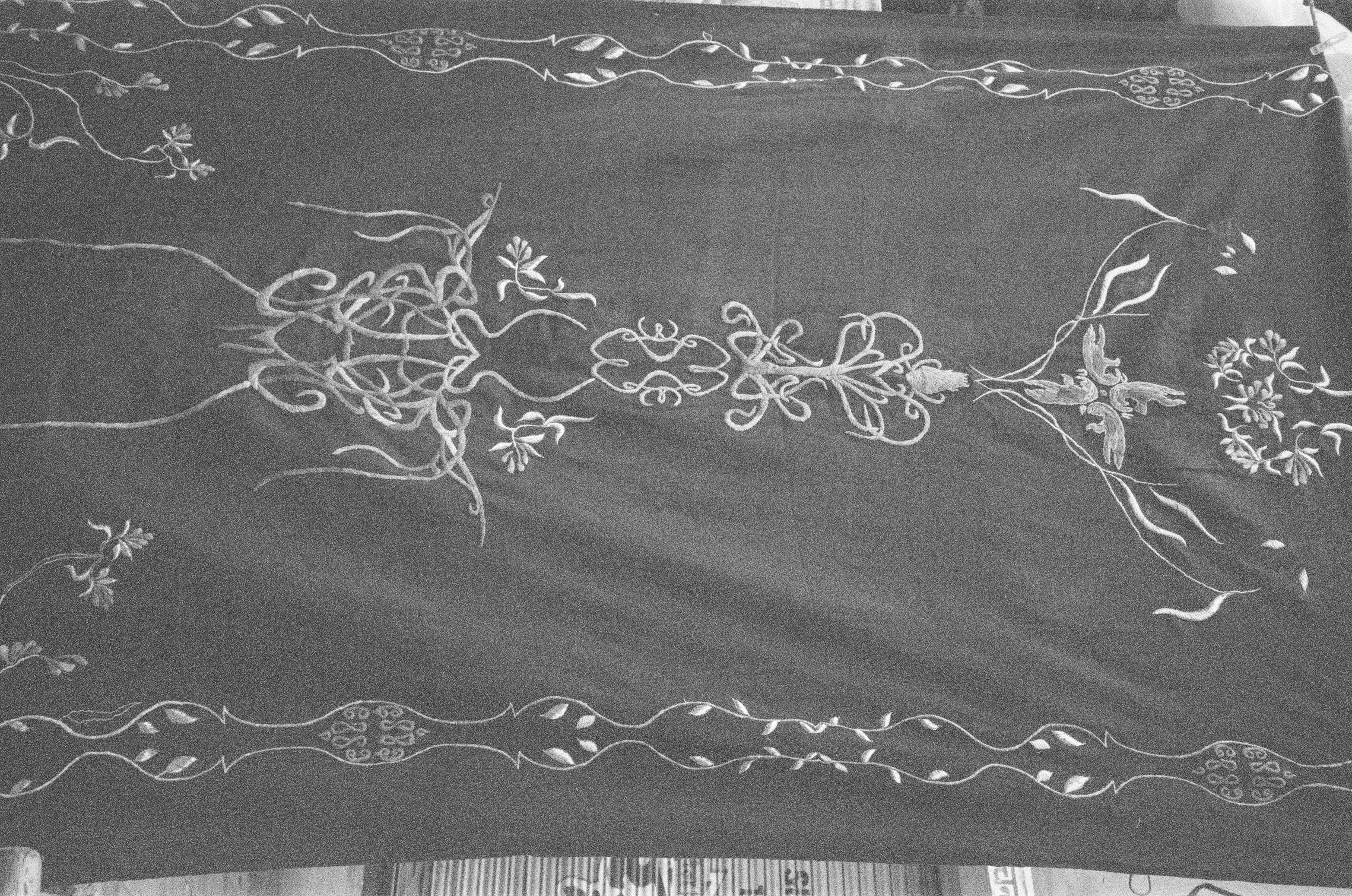
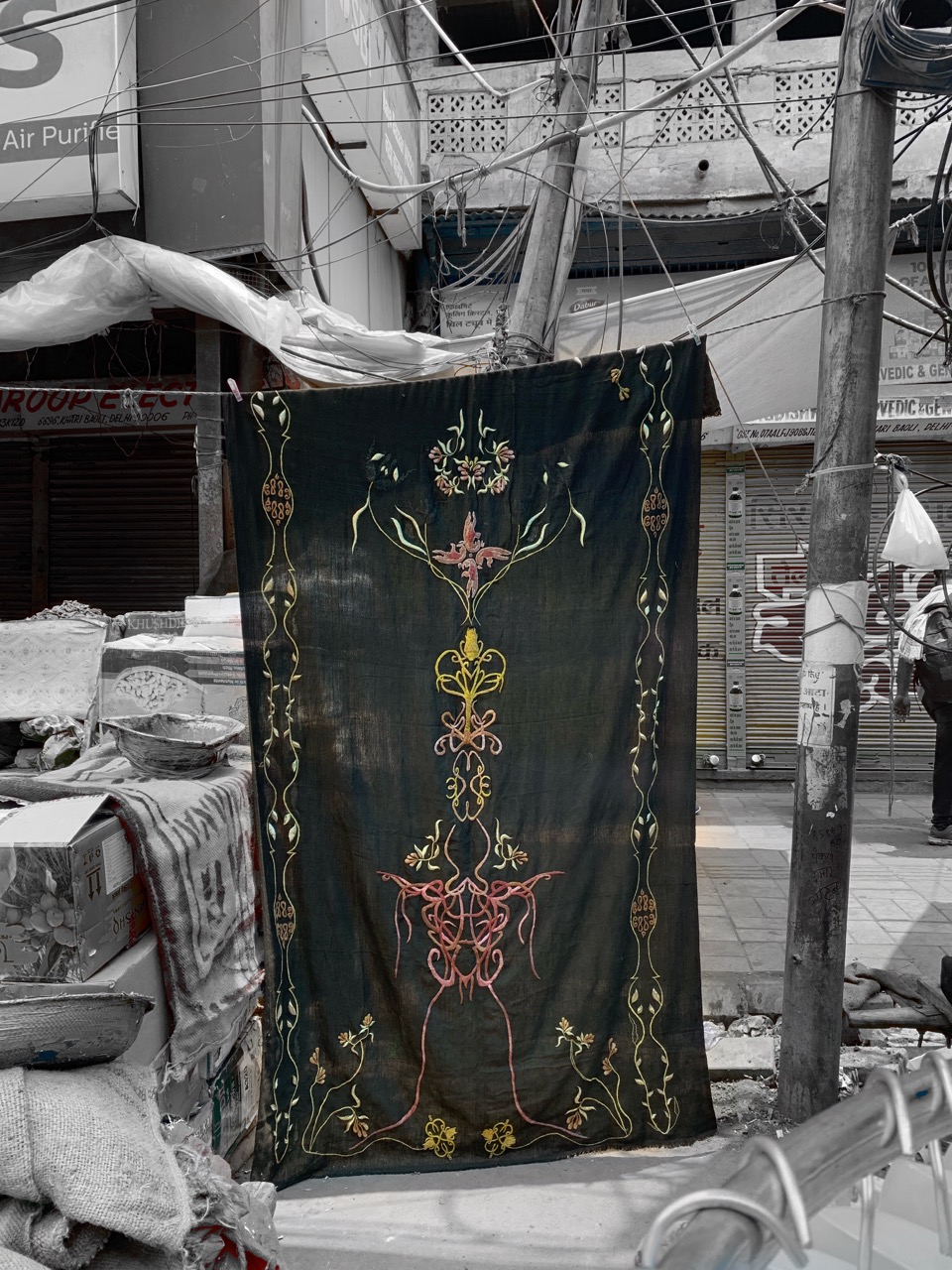
Prompted by Amitav Ghosh's “The Nutmeg Curse’ spice plants like Peppercorn, Cinnamon, Clove, Nutmeg and Turmeric collide in Dark Hairy Roots - a tapestry, weaving the interconnectivity of plants, faith and human hands as one epic force; one that will always confuse and flatten the colonial fantasy of commodify and capitalise. Drawn in connection to each other like capillaries pumping life around; turmeric and madder roots root down their stems that bloom the flowers of cinnamon and nutmeg that grow high into vines of peppercorn that entangle all around.
“This European negating of life, muting of nature enforced its colonial, separationist ideologies as being apart from the earth and therefore was not merely a process of establishing dominion over human beings; it was also a process of subjugating, and reducing to muteness, a texture universe of beings that was once thought of as having agency, powers of communication, and the ability to make meaning; like water, plants and animals. This silencing of the natural world and certain people were essential to the extraction and exploitation of them” (A.Ghosh)
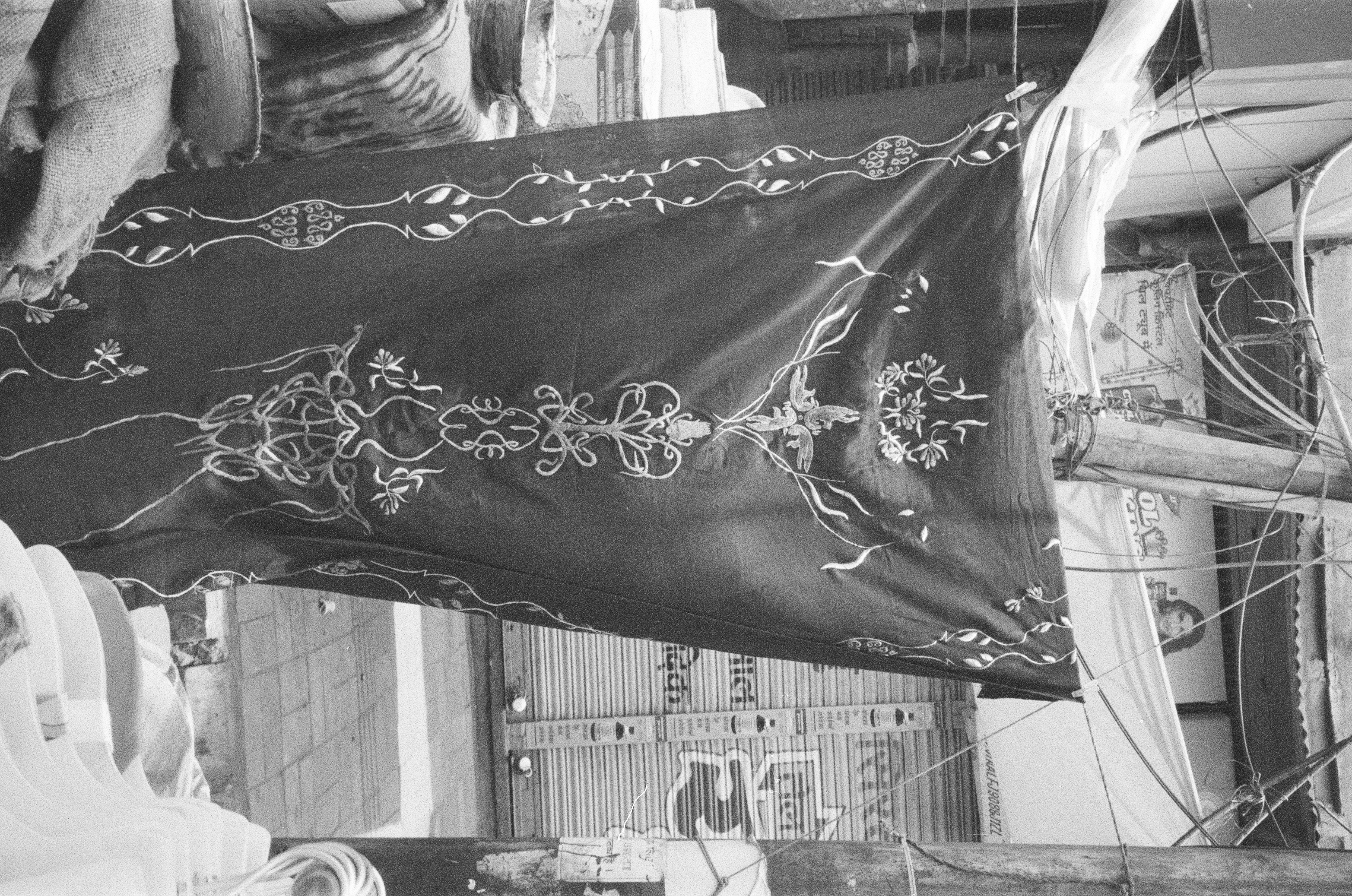
Turmeric Cinnamon Nutmeg were ground into dye baths of cutch, marigold and madder roots symbolic of the power that both spice and cloth had on British colonial thirst and taste; bestowing them with the fragrant magic of the plants themselves. The dark sky is dyed in indigo and iron, recalling the blue of indigo extraction and cultivation in Bengal and beyond. Made in collaboration with and under the guidance of embroiderers Vijay bhai and Sadaam Ji who helped me do the Zardozi work - Zardozi is the ancient technique of embroidering coiled gold, divine interventions between thread and metal. Brass casted peppercorns are embroidered into their plant places - the heaviness of the metal is a marker of the legendary value of spice against gold and mystically symbolic with their ability to colour food gold considered nourishing, said to be endued with the vitality of the sun. Placed in Khari Bouli the oldest and largest spice market in Asia.
The drawings are inspired by collections of botanical illustrations done by Indian Islamic painters that made up most of the horticulture archive in the UK between the 17th -20th century.
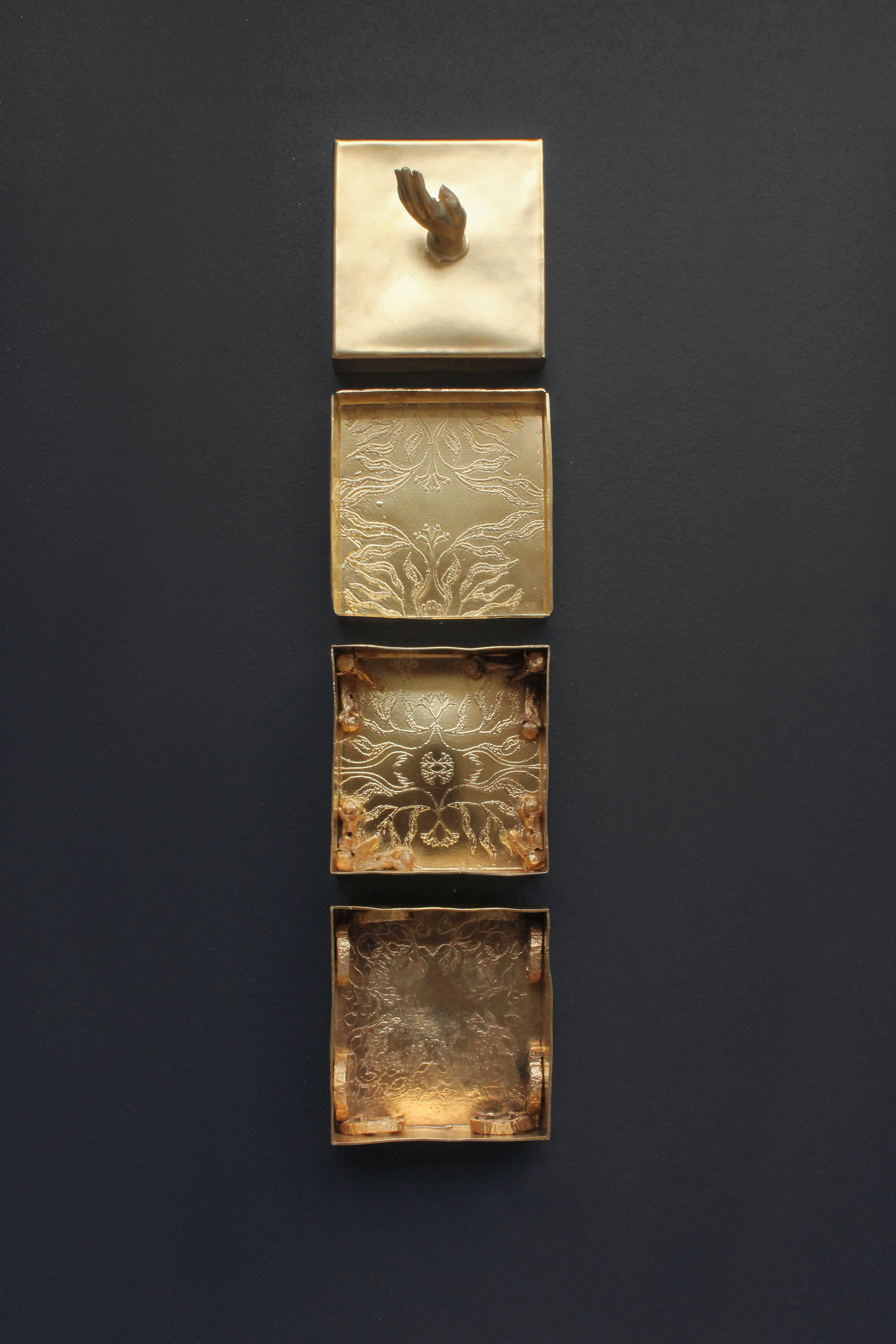
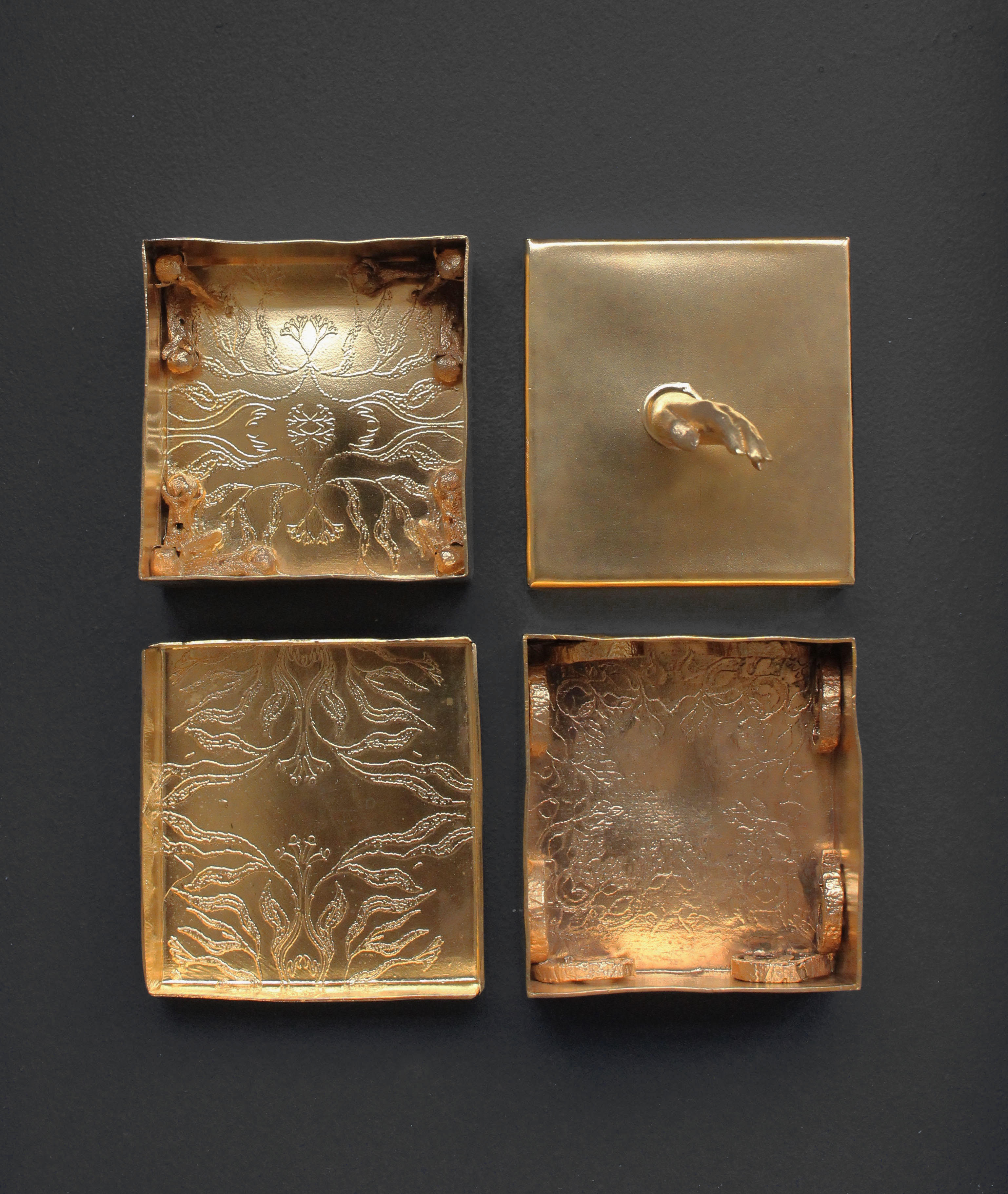
Hand-crafted spice boxes, with botanical etchings and casted spices, adorn the inside accompany the piece illustrating the legendary value of spice against gold and mystically symbolic with their ability to colour food gold considered nourishing, said to be endued with the vitality of the sun.
Shown at Khari Bouli market in Old Delhi - the oldest and largest spice market in the world.